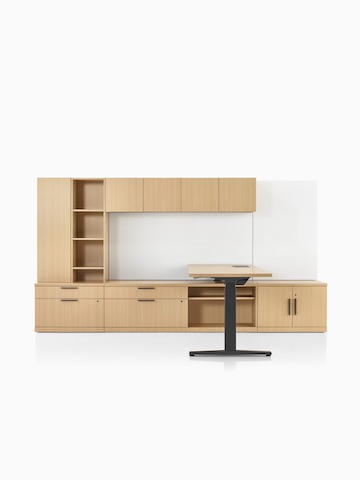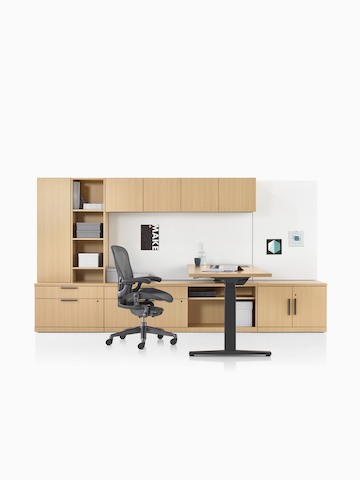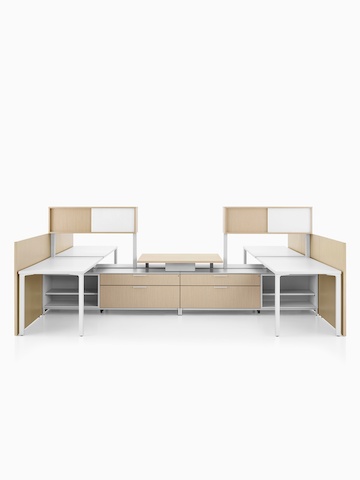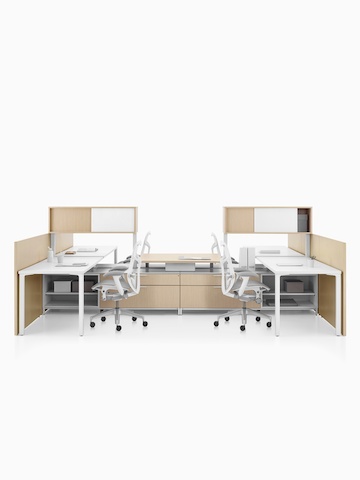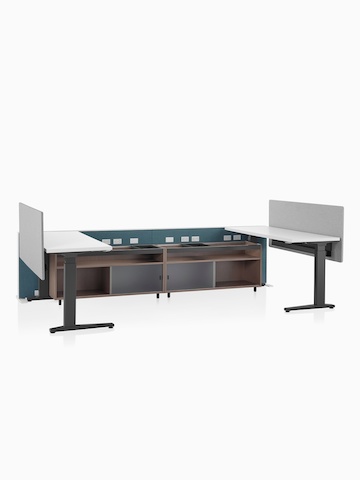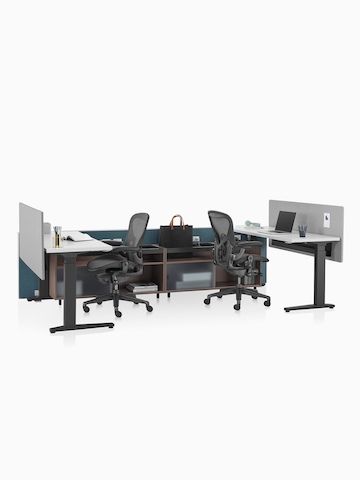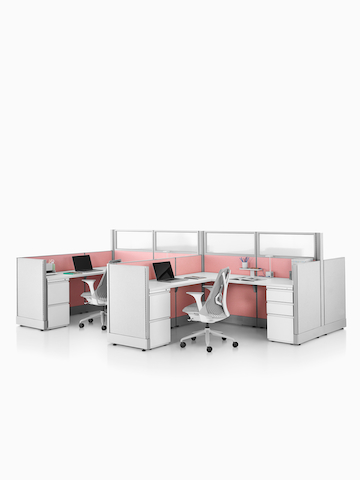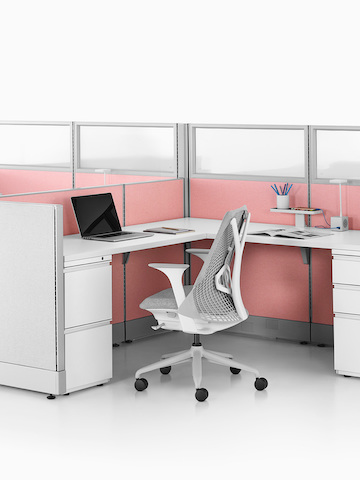
Product Story
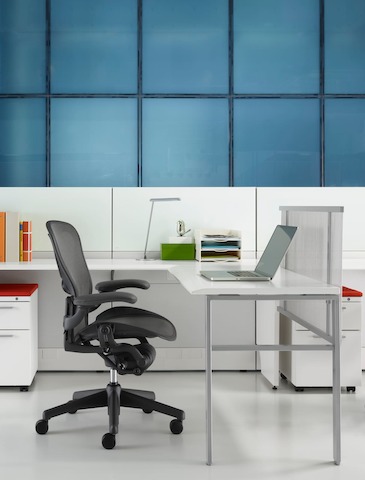
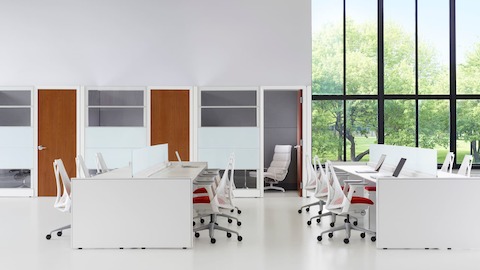
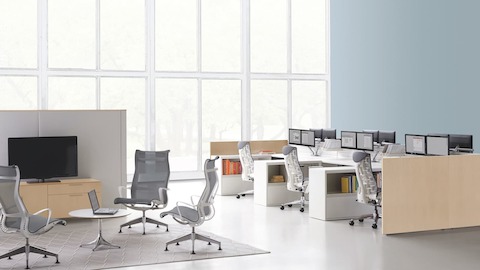
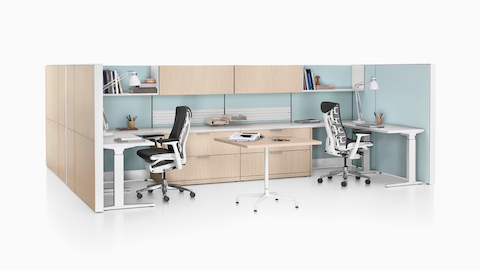
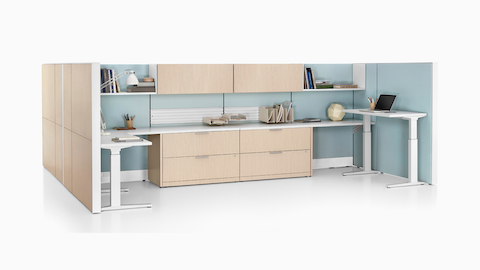
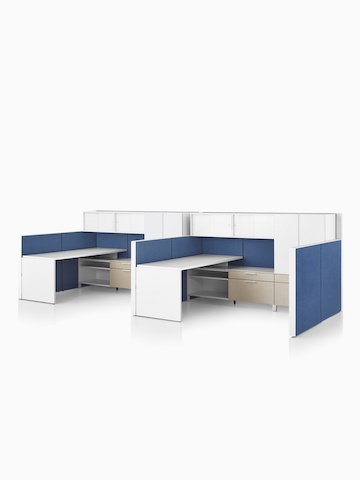
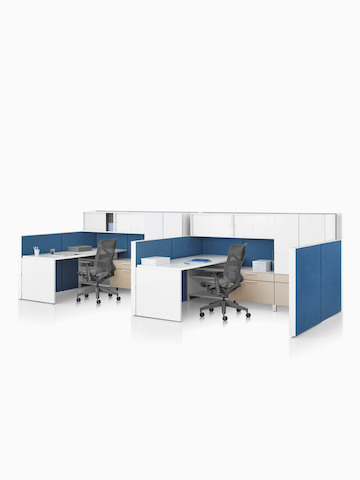
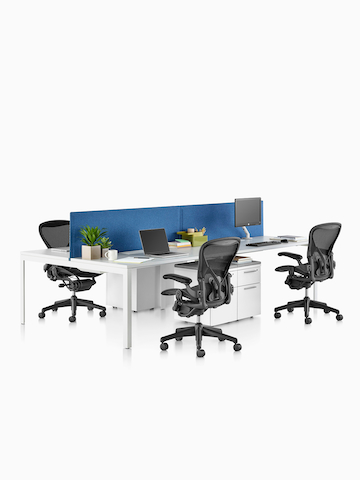
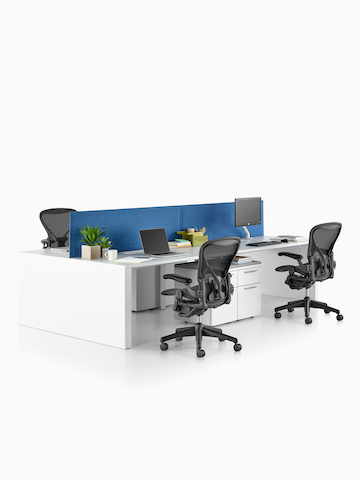
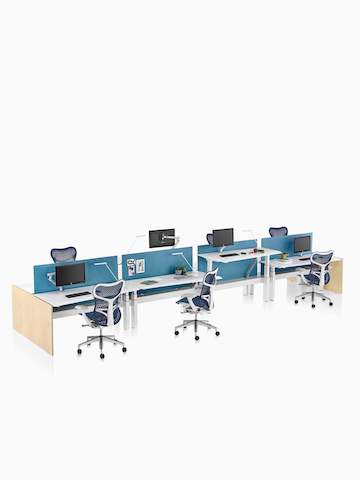
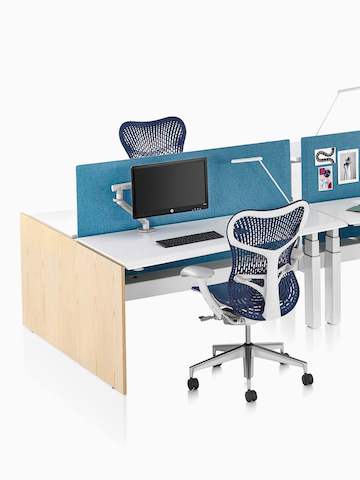
Ethos: a person's or group's character and guiding values. Ethospace lets you express in interior architecture what you or your organization is all about. Its dexterity and extensive product line help you define, and redefine, spaces to support all kinds of work and give your people exactly what they need. Sophisticated and technologically adept, with comprehensive options that make the most of planning possibilities.
Freedom and Diversity
Creating with Ethospace - you have nearly unlimited design options. You can make traditional or out-there contemporary spaces.
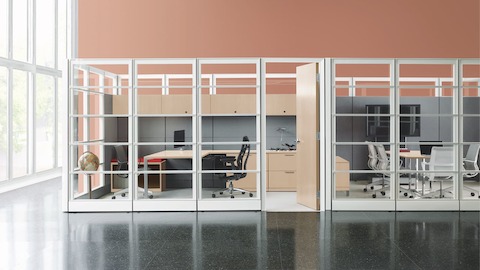
Make a strong architectural statement or create a space that's open, light, transparent. Choosing from 90-, 120-, and 135-degree connectors means you can create individual workstations, enclosed offices, and group spaces that flow together, or stay separate, with ease.
The First Frame-and-Tile System
Structural steel frames define the Ethospace system workspace, provide the foundation for hang-on components, and house yards and yards of wiring and cables.
Change is Built In
Evolves with you. New components integrate with what you already have. Change, reconfigure, update—your investment is protected. And you can make big changes while keeping the steel-frame walls in place. Off-module capability means that tiles and other components can attach at any point horizontally along either side of a wall.
High-Tech Performance
Ethospace accommodates the changing technology of the 21st century workplace.
Huge capacity. When powered, the open-frame interior holds up to 74 Category 5e 4-pair UTP cables or 57 Category 6 cables at a 60 percent fill rate in the base, and an additional 47 Category 5e and 36 Category 6 cables at every 8 inches of frame height.
Earth-Friendly
As befits an advanced system design, Ethospace respects the planet. The steel frames that form the basis of the system are 100 percent recyclable; the entire system is 78 percent recyclable.
Made of 35 percent recycled content, Ethospace components are nontoxic and renewable: Powder coating on all metal parts and Formcoat surfaces, with no VOCs; water-based stains, with no solvents; and sustainable woods obtained only from managed forest resources.
Technology drives changes in offices, homes - virtually everywhere these days. In the late 1970s, technological kinds of change were first gearing up. Offices were being invaded by a demanding new tool: the computer. Sensing the waves of innovation that would follow, we asked two product designers to take a look at how workers were interacting with their spaces and how new technology could be accommodated.
Bill Stumpf and Jack Kelley researched office activities and processes and listened to what users said made a productive office environment. They concluded that the offices of the time weren't responding well to either people's needs or the changes affecting them. How could these rapidly changing environments be improved?